
Insisting on Life

The war in Ukraine is everywhere. Life keeps showing up anyway. Air raid sirens sound every day. Explosions too, sometimes close, hopefully far. People check their apps to see where the missiles and drones are headed, then go back to what they were doing. They work. They study. They fall in love, cook dinner, meet friends. Life doesn’t stop. It insists on itself, carrying the war inside it.
After dark, the center of Lviv fills with music. Students gather in circles around someone with a guitar or a small band. They sing the old folk songs and new Ukrainian rock written after Russia’s latest invasion. There are many circles, and you can walk from one to another, stay wherever the melody or lyrics speak to you. It is life creating itself in the middle of war.
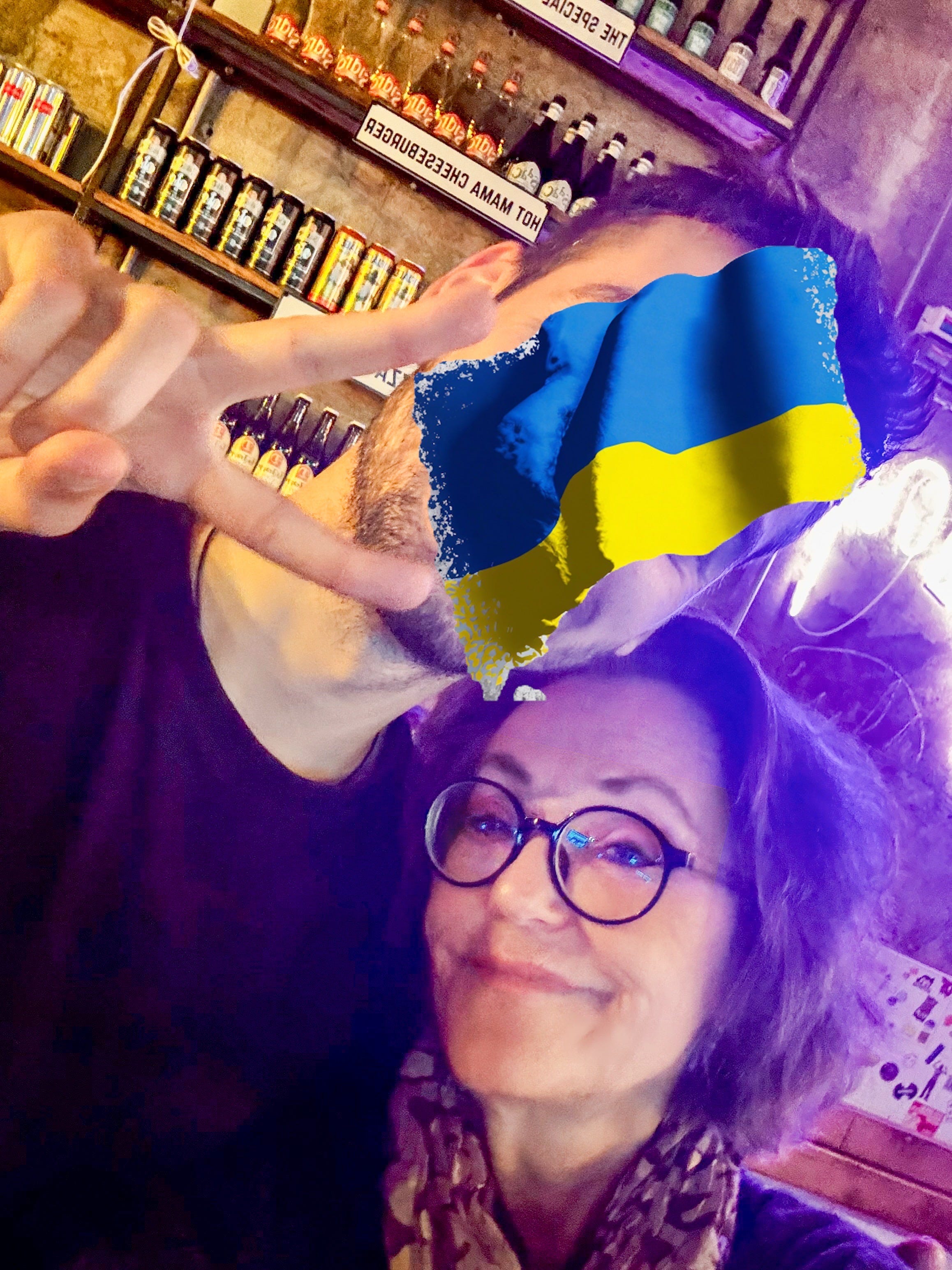
A few blocks away there is a new burger joint. The cheeseburgers are better than I expected. The air smells of fries. American rap, full of profanity, shakes the room. It is packed with students, and I notice that most of them are girls, their voices rising and falling over the music. The walls are covered in graffiti. Everything feels young, loud, and deliberately alive.
At the next table a young man began to talk to us. He spoke about Shakespeare, Game of Thrones, and the Ukrainian language. His name was Mykola, and he looked like a poet from central casting, slender, with kind eyes. I thought he was probably a grad student.
When I asked what he thought about the war, he paused. “I am a soldier,” he said. “This is my last night on leave. I go back tomorrow.” He looked down before he spoke again. “I am a soldier because this is how I understand the war. It is how I can protect my people, my country, our future.”
When the meal ended, we tried to pay for his order, an inadequate, clumsy gesture of thanks for his risking his life. That embarrassed him. “Please don’t,” he said. “I don’t want to be thanked.”
When we stood to leave, he hugged me, first lightly, then hard. “Call me Kolya,” he said, a nickname his mother would use. He was my son’s age. And for a moment I felt he was holding his mother, and I was holding my child.
War does not always look like trenches or smoke. Sometimes it looks like circles of young people singing in the center of town, insisting on life. Sometimes it looks like a young man eating a cheeseburger, talking about Shakespeare, and leaving for the front in the morning.
My husband and I spent 3 weeks in Ukraine, mostly Lviv, this past summer. You bring back the experience of the "deliberately alive" so vividly. Your description of your interaction with the young man had the powerful impact of poetry. Thank you for this and your other posts! BTW - who does the wonderful drawings /etchings that accompany many of them?